
Homeland Security Inmate Search gives the public direct access to real-time immigration detention records through the U.S. Immigration and Customs Enforcement (ICE) Online Detainee Locator System (ODLS). This free, password-free tool shows where someone is being held, their full name, age, A-Number, and facility location. Launched in 2005, ODLS updates every night with new arrests, releases, and transfers. Users must enter at least one identifier—like an alien registration number or date of birth—to get results. The system works in English, Spanish, Arabic, Chinese, and Tagalog. Third-party sites like My Inmate Locator also pull from this database and add features like projected release dates, booking times, and direct phone numbers for detention centers. All searches are public and take just seconds.
How the Homeland Security Inmate Search System Works
When someone uses Homeland Security Inmate Search, the system connects directly to ICE databases across more than 90 federal detention sites. It checks each record for accuracy before showing results. This process usually finishes in under 10 seconds. The nightly refresh ensures that new admissions, court-ordered releases, and facility transfers appear by morning. Users don’t need an account or login. They only need basic info about the person they’re looking for. The system validates entries against live data from ICE Processing Centers and private contract facilities. Results display the detainee’s current custody status, facility name, and contact details for follow-up calls.
Required Information for a Successful Search
To use Homeland Security Inmate Search, you must provide at least one key piece of information. The most reliable identifier is the A-Number—a nine-digit alien registration number assigned by USCIS. If you don’t have it, you can search using the person’s full name and exact date of birth. Some third-party tools also allow searches by country of origin or last known address, but ICE’s official ODLS only accepts A-Number or name plus DOB. Without these, the system won’t return any results. Always double-check spelling and formatting. Even small errors can block access to records. For privacy, the system doesn’t show sensitive details like medical conditions or legal case numbers.
Official ICE Online Detainee Locator System (ODLS)
The core of Homeland Security Inmate Search is ICE’s ODLS portal at locator.ice.gov/odls. This government-run site is the most accurate and up-to-date source for immigration detention records. It pulls data directly from Enforcement and Removal Operations (ERO) systems. The interface is simple: enter an A-Number or name and birth date, then click “Search.” Results appear instantly with the detainee’s full name, age, A-Number, and facility location. The page also lists the facility’s phone number so families can call for visitation rules or emergency updates. ODLS supports five languages and complies with federal transparency laws. It’s maintained by DHS and updated nightly to reflect custody changes.

Third-Party Inmate Search Tools
Several independent websites offer Homeland Security Inmate Search services by pulling data from ICE’s ODLS. My Inmate Locator is one example. It displays the same core info—name, A-Number, facility—but adds extra details like booking date, estimated release window, and direct dial numbers for each detention center. These sites often translate results into Vietnamese, French, and other languages not supported by the official ODLS. They update weekly, so there may be a slight delay compared to ICE’s nightly refresh. While convenient, users should verify critical info by calling the facility directly. Third-party tools are not affiliated with DHS but rely on publicly available data.
http://www.myinmatelocator.com/ICE/ICE.html
Major ICE Detention Facilities
ICE manages over 90 detention centers nationwide. These include ICE Processing Centers run directly by the agency and Federal Contract Detention Facilities operated by private companies under government contract. Each site has a security level—minimum, medium, or high—based on the detainee’s risk profile. Health needs also affect placement; some centers specialize in medical care or mental health support. Notable locations include the Stewart Detention Center in Lumpkin, Georgia, and the Adelanto ICE Processing Center in California. You can find anyone held at these sites using Homeland Security Inmate Search by entering their A-Number or full name and birth date. If online results are unclear, call the facility directly for confirmation.
https://www.ice.gov/detention-facilities
Stewart Detention Center Inmate Lookup
The Stewart Detention Center in Lumpkin, Georgia, houses hundreds of immigration detainees. To locate someone held there, use Homeland Security Inmate Search with their A-Number or full name and date of birth. If the online tool doesn’t show results, call the facility at (229) 838-5000. Staff can confirm custody status and provide court date information. Visitation is limited to weekdays, and all visitors must bring a government-issued photo ID plus proof of relationship. The center follows ICE standards for safety, medical care, and legal access. Records update nightly, so recent arrivals may not appear until the next day.
https://tadeosilvalaw.com/immigration-detention-center-inmate-search/
State vs. Federal Inmate Search Systems
Homeland Security Inmate Search only covers federal immigration detainees, not state prisoners. For state inmates, use local Department of Corrections portals. Nevada’s NDOC updates records every 15 minutes and offers phone support through Family Services at (775) 887-3367. California’s CDCR Public Inmate Locator provides continuous updates and links to victim assistance programs. Los Angeles County’s Sheriff’s Department runs a 24/7 Inmate Information Center at (213) 473-6100. These systems are separate from ICE’s ODLS. Never assume a state prison holds immigration detainees—most are in federal custody. Always check both systems if you’re unsure where someone is located.
California and Los Angeles County Resources
California’s CDCR Public Inmate Locator lets you search by name, CDCR number, or birth date. It updates continuously and includes parole eligibility dates. For help, call the Identification Unit at (916) 445-6713 weekdays from 8 a.m. to 5 p.m. Los Angeles County’s Inmate Information Center gives booking dates, housing units, and release times via phone at (213) 473-6100. Medical emergencies go to the Medical Command Center at (213) 893-5544. Note: bookings from the last two hours won’t appear to protect intake procedures. These tools complement Homeland Security Inmate Search but serve different populations—state inmates vs. federal immigration detainees.
http://inmatelocator.cdcr.ca.gov/ https://app5.lasd.org/iic/
Privacy and Data Transparency
The Department of Homeland Security publishes System of Records Notices (SORNs) to explain how it collects, stores, and shares personal data. The main notice, DHS/ALL-003, covers immigration enforcement records including those used in Homeland Security Inmate Search. It lists what info is kept, who can access it, and how long it’s retained. These notices are public and available on the DHS website. They ensure compliance with the Privacy Act of 1974. Users can download PDF versions for review. All searches are logged for security, but no personal data is required to perform a lookup. The system masks sensitive fields after initial display to prevent misuse.
https://www.dhs.gov/system-records-notices-sorns
Checking Immigration Case Status Separately
Homeland Security Inmate Search shows detention status, not case progress. To track an immigration application or petition, use the DHS Case Status Portal. Enter the receipt number from your Form I-797 notice. The system shows if your case is pending, approved, denied, or needs more evidence. It also estimates processing times based on current USCIS workloads. This tool is separate from ODLS and requires no personal login beyond the receipt number. Each access is recorded for security. Results appear within seconds and include next-step instructions. Always keep your receipt number safe—it’s the only way to check status online.
https://www.dhs.gov/check-immigration-case-status 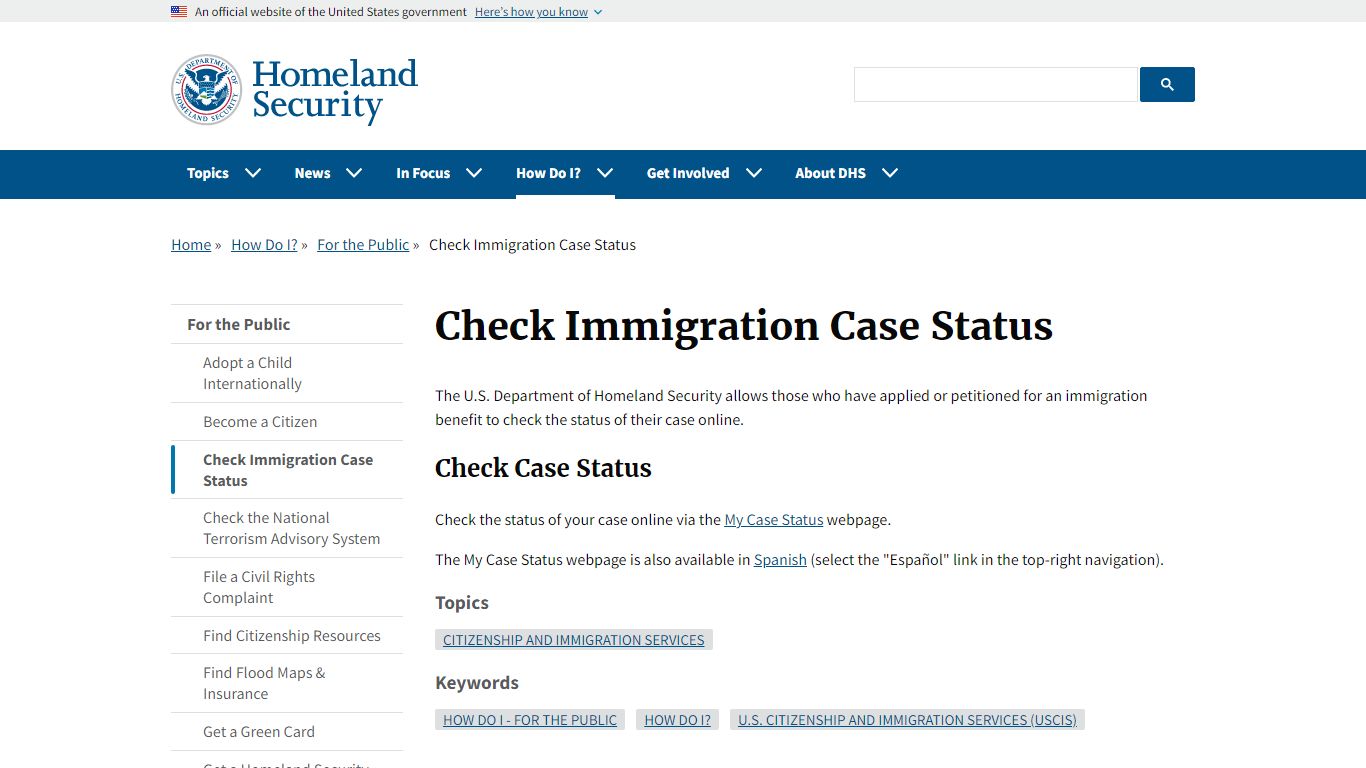
About U.S. Immigration and Customs Enforcement (ICE)
ICE enforces over 400 federal laws related to border security, immigration violations, and transnational crime. Its two main branches are Enforcement and Removal Operations (ERO), which runs detention and deportation, and Homeland Security Investigations (HSI), which handles complex crimes like human trafficking and cyberattacks. ERO operates the detention network searched through Homeland Security Inmate Search. HSI focuses on investigations that may lead to arrests and custody. Both divisions report to DHS and follow strict guidelines for detainee rights, medical care, and legal access. ICE’s mission centers on public safety and national security.
Frequently Asked Questions
Many people have questions about Homeland Security Inmate Search. Below are common concerns with clear, fact-based answers. Each response draws from official DHS sources and reflects current policies as of 2024. If you need more help, contact the relevant facility or visit the ICE website directly.
Can I search without an A-Number?
Yes, but you must provide the person’s full name and exact date of birth. The A-Number is the most reliable identifier, but ICE’s ODLS allows name and DOB searches. Make sure the spelling matches government records. Nicknames or partial names won’t work. If the person used a different name during arrest, that version may appear in the system. Always cross-check with other documents if possible. Without an A-Number, results may be less precise if multiple people share the same name and birth date.
Why can’t I find someone in the system?
Several reasons could explain missing results. The person might not be in ICE custody—they could be released, transferred to a non-ICE facility, or never detained. Recent bookings may not appear until the next nightly update. Input errors like typos in the name or wrong birth date also cause failures. Some detainees are held in facilities not yet synced with ODLS. If you believe someone is detained but not showing up, call the suspected facility directly. Provide as much detail as possible to help staff locate the record.
Is the information on third-party sites accurate?
Third-party sites like My Inmate Locator pull data from ICE’s official ODLS, so core details are usually correct. However, they update less frequently—often weekly instead of nightly. They may add estimates like release windows based on past trends, but these aren’t guaranteed. Always verify critical info by calling the detention center. Never rely solely on third-party tools for legal decisions or urgent matters. The most trustworthy source remains locator.ice.gov/odls.
How often does the database update?
The Homeland Security Inmate Search database refreshes every night around midnight Eastern Time. New arrests, releases, and transfers from the previous day appear by morning. This schedule ensures near-real-time accuracy while allowing system maintenance. Third-party sites may lag by several days. For the latest status, check the official ODLS portal. If you searched right after a major event like a raid, wait 24 hours for records to process.
Can I visit someone found through this search?
Yes, but rules vary by facility. Once you locate a detainee using Homeland Security Inmate Search, call the listed phone number to confirm visitation hours and requirements. Most centers require a government-issued photo ID and proof of relationship. Some limit visits to weekdays or specific times. Minors may need adult supervision. Always call ahead—policies change, and walk-ins are rarely allowed. Detainees in medical isolation or disciplinary status might not receive visitors temporarily.
What if the person is not in ICE custody?
If Homeland Security Inmate Search returns no results, the individual may be in state prison, local jail, or already released. Check state Department of Corrections websites like Nevada’s NDOC or California’s CDCR. For recent arrests, contact the county sheriff’s office. If deportation occurred, records may be archived. In rare cases, detainees are held under different agencies like CBP. When in doubt, consult an immigration attorney for guidance on locating someone outside standard systems.
Are search results public record?
Yes. All data from Homeland Security Inmate Search is public under federal law. Anyone can access it without registration. The system logs searches for security but doesn’t track individual users. Personal details like A-Numbers and facility locations are not considered confidential once a person is detained. However, sensitive info such as medical conditions or legal strategy remains protected. Always use this data responsibly and respect privacy when sharing results.
Official Contact Information:
U.S. Immigration and Customs Enforcement (ICE)
Phone: 1-888-351-4024 (general inquiries)
Website: https://www.ice.gov
Online Detainee Locator: https://locator.ice.gov/odls/